Camping Etiquette
How to behave on a campsite, at an RV parking spot (ställplats) and out in the wild — the written rules and the unwritten ones.
Last updated: July 2026
Contents
- The one rule that covers everything
- Arriving and picking a pitch
- Noise and quiet hours
- Space, awnings and generators
- Grey water, toilets and dump stations
- Shared facilities
- Electricity, water and rubbish
- Dogs
- Children and bikes
- Fires and barbecues
- RV parking (ställplats): the different rules
- Camping in the wild
- Country by country
- Leaving: the two-minute check
- The short version
The One Rule That Covers Everything
Leave no trace that you were ever there. If someone arriving after you cannot tell that a five-metre vehicle stood on that spot for a night, you did it right.
Everything below is really just that rule applied to specific situations. When you meet a case this guide does not cover, ask yourself what a neighbour would think if they watched you do it — and you will almost always land on the right answer.
Arriving and Picking a Pitch
- Arrive in daylight when you can. Reversing, levelling and hooking up in the dark, with headlights sweeping across other people's windows, is the loudest thing you can do all day.
- Check in at reception first, even if the barrier is open and pitches are obviously free.
- Drive at walking pace. Children, dogs and cyclists appear from behind vehicles with no warning.
- Take the pitch you were given, not the nicer empty one next to it.
- Where pitches are unmarked, park considerately: leave room for the vehicles that arrive after you rather than centring yourself in a space that fits two.
- Do the noisy jobs — levelling ramps, awning, generator check — before the evening settles, not after.
- If you arrive very late, park simply and quietly and sort out the details in the morning. Nobody minds a badly parked motorhome at 23:00; everybody minds ramps being hammered into place.
Noise and Quiet Hours
Most campsites have quiet hours, typically 22:00 to 07:00, and many also keep a quiet period in the early afternoon. Where nothing is posted, assume 22:00 to 07:00 anyway.
- No music outdoors after quiet hours — not even quietly. Sound carries much further across an open site than it feels like it does.
- Take conversations inside when the hour comes. A relaxed group around a table is easily audible in fifteen vehicles.
- Doors and lockers: close them, do not let them slam. A motorhome door is the classic 02:00 sound.
- No engines during quiet hours, including a quick move or a warm-up. That includes generators and, on many sites, air conditioning that runs loudly outside.
- Barrier codes, gates and gravel: expect anything mechanical to be heard by everyone, and time it accordingly.
- Children playing is normal daytime life on a campsite. Children running between pitches at 07:00 is not — keep them close until the site wakes up.
Space, Awnings and Generators
- Keep to your own pitch. Chairs, tables, bikes, buckets and washing lines all belong inside your area, not spread onto the empty pitch beside you.
- Do not walk across other people's pitches, however tempting the shortcut. A pitch is someone's garden for the week.
- Fire-safety distance between vehicles is a legal requirement on many sites (often three metres, sometimes four). It is not a suggestion, and it is why you may be asked to move.
- Point your awning, door and outdoor kitchen away from your neighbour's living space where the pitch allows a choice.
- Generators: only where they are permitted, only in daytime, and never overnight. Many sites ban them outright.
- Do not run a cooker, grill or heater under an awning or between vehicles. Carbon monoxide and fire spread are the two things that turn an incident into a tragedy.
Grey Water, Toilets and Dump Stations
This is where good and bad campers differ most visibly, and where the damage to our collective reputation is done.
- Never empty grey water onto the ground, into a hedge, down a storm drain or into a ditch. It contains grease, food and detergent, it smells within hours in summer, and it is illegal in most places.
- Never, under any circumstances, empty the toilet cassette anywhere but a proper WC or chemical disposal point. Not in a bush, not in a public toilet's hand basin, not in a stream.
- Use the dump station (dumpstation / tömningsstation / Entsorgung), then rinse it down after yourself. Leave it cleaner than you found it.
- Fill fresh water with a hose kept only for drinking water, and never touch the fresh-water tap with a cassette or a grey-water hose.
- Do not block the service point while you cook lunch. Empty, fill, move — others are waiting, often with a full cassette.
- Carry a bucket. Where a site has no grey-water drain, you catch the water and carry it to the right place rather than letting it run.
Shared Facilities
- Leave the shower as you would like to find it: no hair in the drain, no puddle across the floor, nothing left on the hooks.
- Keep showers short where water is metered or the site is busy. Somebody is queuing.
- Wash dishes at the washing-up sinks, never in the bathroom basins, and never leave food scraps in either.
- Clean the barbecue, the kitchen hob and the sink after use. The next person is often standing right behind you.
- Do not reserve washing machines, tables or the playground with your belongings.
- Toilets: leave them usable. If something is broken or out of paper, tell reception — they cannot fix what they do not know about.
Electricity, Water and Rubbish
- Use your own cable, in one piece, fully unrolled, and keep it out of walkways. A coiled cable under load gets hot.
- Respect the amperage. Pitches are often 6 A or 10 A, and a kettle plus a heater will trip the whole row, not just you.
- One pitch, one hook-up. Do not daisy-chain a second vehicle onto your post.
- Water is not unlimited, particularly in southern Europe in summer. Do not wash the vehicle with drinking water unless the site says you may.
- Sort your rubbish the way the site does — glass, metal, paper, food, residual. Getting it wrong costs the site money and they may stop offering it.
- Never leave a bag beside a full bin, or on the ground at a spot with no bin at all. If there is nowhere to put it, it travels with you.
Dogs
- On a lead everywhere on site, however well trained your dog is. Other people are afraid of dogs, and other dogs are not always friendly.
- Pick it up. Every time, including at night, including in long grass, including at an unmanned parking spot in the middle of nowhere.
- Do not let your dog toilet on other pitches, on the playground or along the path to the toilet block.
- A dog barking alone in a locked vehicle is the single most common complaint on campsites. If yours does that, one of you stays.
- Check where dogs are actually allowed: many sites exclude the beach, the pool area and the restaurant, and some have dog-free sections.
- Never leave a dog in a vehicle in the sun. A motorhome heats faster than a car.
- In the Nordics there are lead-obligation periods in spring and summer to protect wildlife and grazing animals — and reindeer and sheep country means lead, always.
Children and Bikes
- Teach the pitch boundaries on the first day. Other people's pitches are not a shortcut and not a playground.
- Cycling and scooters: walking pace between pitches, and nothing at all after dark.
- Ball games belong on the grass area, not between vehicles where a stray kick means a cracked window or a scratched panel.
- Service points, barriers and electrical posts are not toys. Say so once, clearly.
- Keep an eye on the water. Most campsite pools are unsupervised, and lakeside pitches have no fence.
Fires and Barbecues
- Open fire only where it is explicitly allowed, and only in the place provided.
- Check the local fire ban before you strike a match. In summer, bans cover most of southern Europe and increasingly the Nordics too — and they include disposable barbecues.
- Never put a barbecue, fire bowl or fire pit directly on grass, roots or a wooden deck.
- Keep water within reach, and never leave a fire — not for two minutes.
- Do not burn rubbish, painted wood or plastic. Your neighbours are breathing it, with their windows open.
- Think about smoke direction. A fire pit upwind of an open window empties a neighbour's vehicle of good will.
- Cold ashes leave with you or go in the ash bin. Never into the hedge, and never onto the ground where somebody will stand tomorrow.
RV Parking (Ställplats): The Different Rules
An RV parking spot — ställplats, stellplatz, aire, sosta — is not a small campsite. It is a place to stand overnight, often free or a few euros, and it works precisely because nobody treats it like a holiday camp.
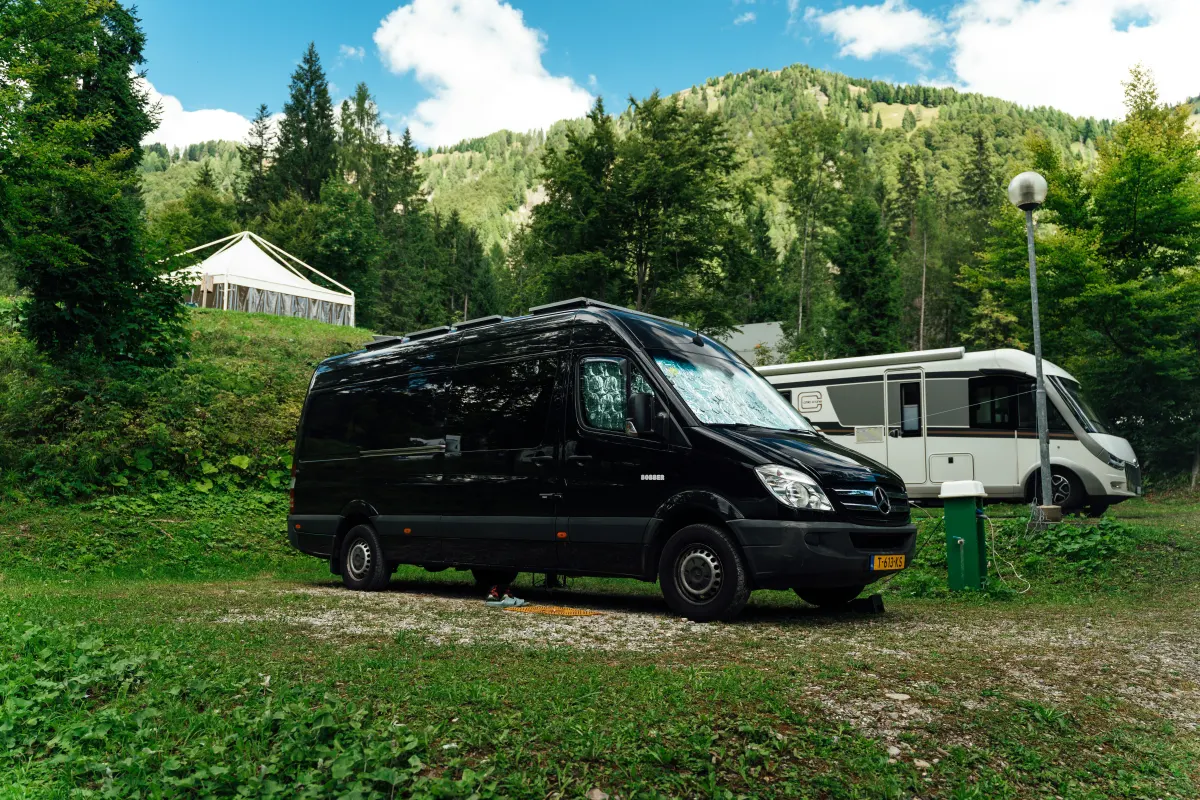
- Park, do not camp. In many places awnings, chairs, tables, washing lines and grass mats are explicitly forbidden, and elsewhere they are simply not what the spot is for.
- Pay, even when nobody is watching and the honesty box looks ignored. Unpaid spots become closed spots — this is the mechanism, every time.
- Respect the maximum stay. If it says 24 hours, leave within 24 hours; do not move one bay along and start again.
- Keep the marked bays. One vehicle, one bay, so the spot holds the number of travellers it was designed for.
- Do not block the service point, the entrance or the bins, even briefly.
- These spots are often inside a town, next to houses. Voices outside at 23:00 are heard in bedrooms, and the complaint goes to the municipality that allowed the parking.
- Leave the bay completely empty: no cigarette ends, no bottle caps, no grey-water stain, no levelling-ramp scuff.
Camping in the Wild
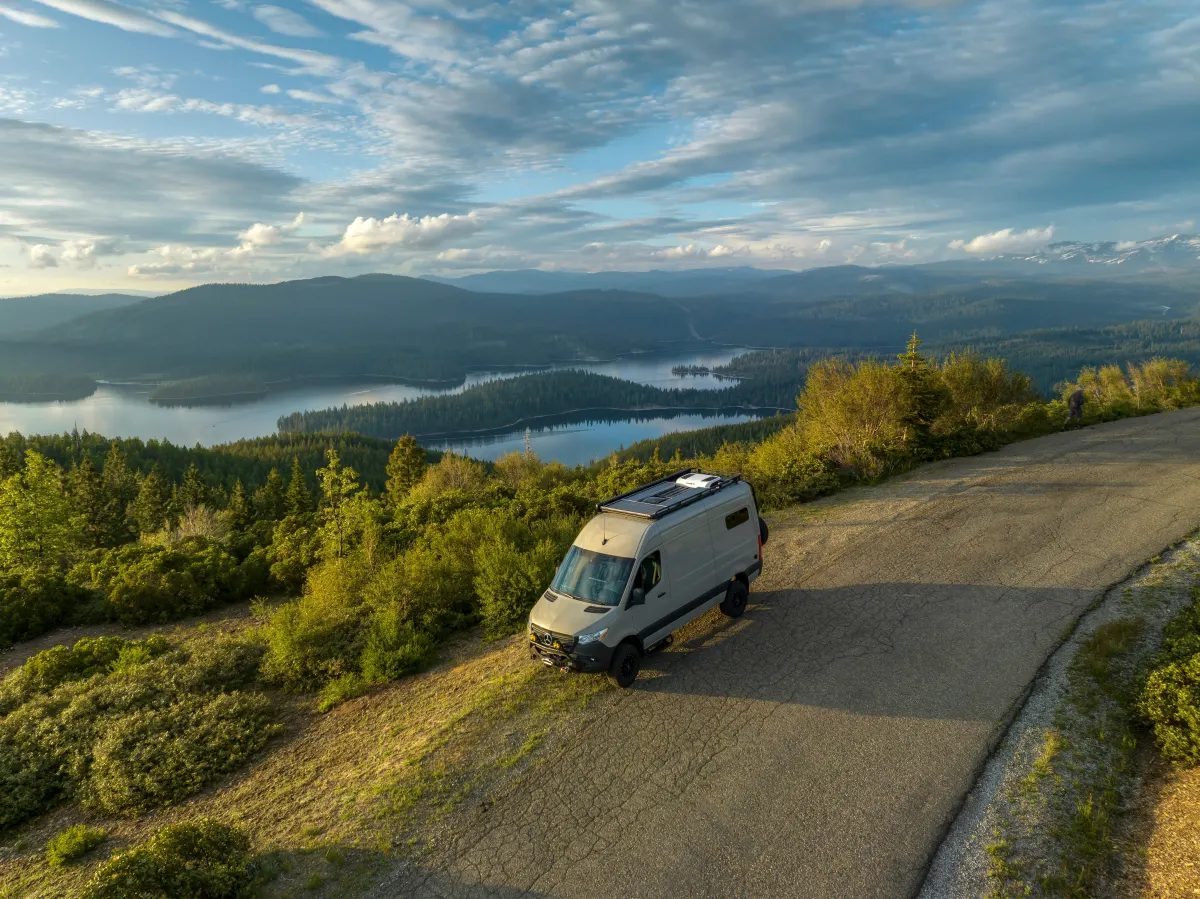
Wild camping ranges from a legal right to a fine that costs more than a month of campsites, depending on which border you crossed. Check before you stop, not after someone knocks on the door.
And note the distinction the law usually makes: sleeping in a vehicle where parking is legal is often tolerated, while putting out chairs, an awning or a tent is camping, which is often not.
Where you may, roughly
- Sweden, Norway and Finland have the right of public access — allemansrätten — but it applies to people on foot, not to vehicles. You may pitch a tent for a night; you may not drive off-road to do it, and a motorhome needs a legal parking place.
- Scotland allows wild camping under its own access code, with the same on-foot logic.
- Denmark, Germany, the Netherlands, France, Spain, Italy, Portugal and Croatia all effectively prohibit wild camping, with fines that are enforced — hardest in Spain, Portugal, Croatia and Italy, and around any coast in summer.
- National parks and nature reserves have their own rules everywhere, and they are usually stricter than the country's. Signs at the entrance beat anything you read online.
- Private land needs the owner's permission. Asking a farmer often works, and pays for itself in eggs.
How to do it so it stays allowed
- One night, then move on. A second night in the same field is what turns a tolerated stop into a problem.
- Keep at least 150 m from the nearest house in the Nordics, and out of sight of it everywhere else. Privacy is the actual point of that rule.
- Arrive late, leave early, stay small. No awning, no chairs, no table, no lights strung between trees.
- Drive only on roads and established tracks. Tyre marks on moss or a meadow last for years and are the damage landowners remember.
- No fire unless you are certain it is allowed — and on peat, moss or dry heath, no fire at all.
- All water is carried out. No grey water on the ground, and no cassette, ever. If you cannot manage a night without emptying something, you need a campsite.
- Human waste, if there is truly no alternative: far from water, buried properly, paper out with you.
- Never block a forest track, a passing place, a field gate or a turning area. Somebody works there tomorrow morning.
- Farm animals and reindeer: close every gate behind you, keep the dog on a lead, and never drive through a herd.
- If someone asks you to move, move — pleasantly and immediately. You are the ambassador for everyone who comes after you.
Country by Country
A rough orientation, not legal advice — rules change, and municipalities set their own on top of national law.
- Sweden: allemansrätten for tents, one night, 150 m from houses. Motorhomes need legal parking; many municipalities ban overnight stays in car parks. Dump stations are common at petrol stations.
- Norway: similar right of access, one to two nights, 150 m from houses. Toll roads and tunnels shape your route more than the rules do. Fire ban 15 April to 15 September in or near forest.
- Denmark: wild camping essentially banned, but a large network of cheap campsites and designated overnight spots. Sleeping in a vehicle at a rest area is usually allowed for one night.
- Finland: right of access as in Sweden, and the same vehicle caveat. Mosquitoes decide your pitch more often than the law does.
- Germany: no wild camping, but thousands of Stellplätze, and one night to restore fitness to drive is tolerated in many places. Quiet hours are taken seriously.
- Netherlands: strictly regulated and densely populated; use the official camperplaatsen. Wild camping is fined.
- France: a huge network of aires, many free. Wild camping is banned on the coast, in parks and in most communes, though a night in a legal parking space is often unremarked. Watch height barriers.
- Spain: parking overnight is legal where parking is legal; camping — chairs, awning, levelling ramps out — is not, and coastal fines are real and large.
- Italy: similar in principle to Spain, plus many towns simply prohibit motorhomes in the centre. The sosta network is good; the signs are the authority.
- Poland: wild camping is banned in forests and parks; a growing network of campsites and parking spots, and generally relaxed enforcement outside protected land.
Leaving: The Two-Minute Check
Walk one slow circle around the vehicle before you drive off. Every experienced traveller does it, and it catches both the etiquette and the expensive mistakes.
- Nothing of yours left on the ground: pegs, mat, ramp, cable, bin bag, dog toy, sock.
- Nothing of yours in the hedge either. Cigarette ends and bottle caps count.
- Grey water and cassette dealt with properly, and the service point rinsed.
- Fire completely cold; ashes taken with you or in the ash bin.
- Rubbish sorted and in the bins, or in the vehicle if there are none.
- Hook-up unplugged at the post first, then at the vehicle, and the cap closed.
- Roof, steps, aerial, satellite dish, awning and hatches all in and closed. This is the circle's other job.
- Gate closed if you opened one, and a word of thanks at reception or to the landowner.
The Short Version
Do
- Arrive and leave quietly, in daylight when you can.
- Pay, always, even into an honesty box nobody checks.
- Keep everything you own inside your own pitch or bay.
- Use dump stations, and rinse them after yourself.
- Pick up after your dog, every single time.
- Read the signs, and follow them over any app or guide.
- Say hello to your neighbours. It solves most problems before they start.
- Leave the place a little better than you found it.
Don't
- Empty grey water or a cassette anywhere but a proper disposal point.
- Run a generator or an engine during quiet hours.
- Play music outdoors after 22:00 — or loudly before it.
- Walk or cycle across other people's pitches.
- Leave a dog barking alone in the vehicle.
- Light a fire during a fire ban, or on moss, peat or a deck.
- Set up a camp at an RV parking spot, or stay past the posted limit.
- Leave a rubbish bag next to a full bin.
- Argue when you are asked to move. Just move.