A wine route through Skåne and Denmark
Nine vineyards from the beech woods of Halland to the edge of the Wadden Sea — two countries, one ferry across the Kattegat, and a season that is shorter than you would like.
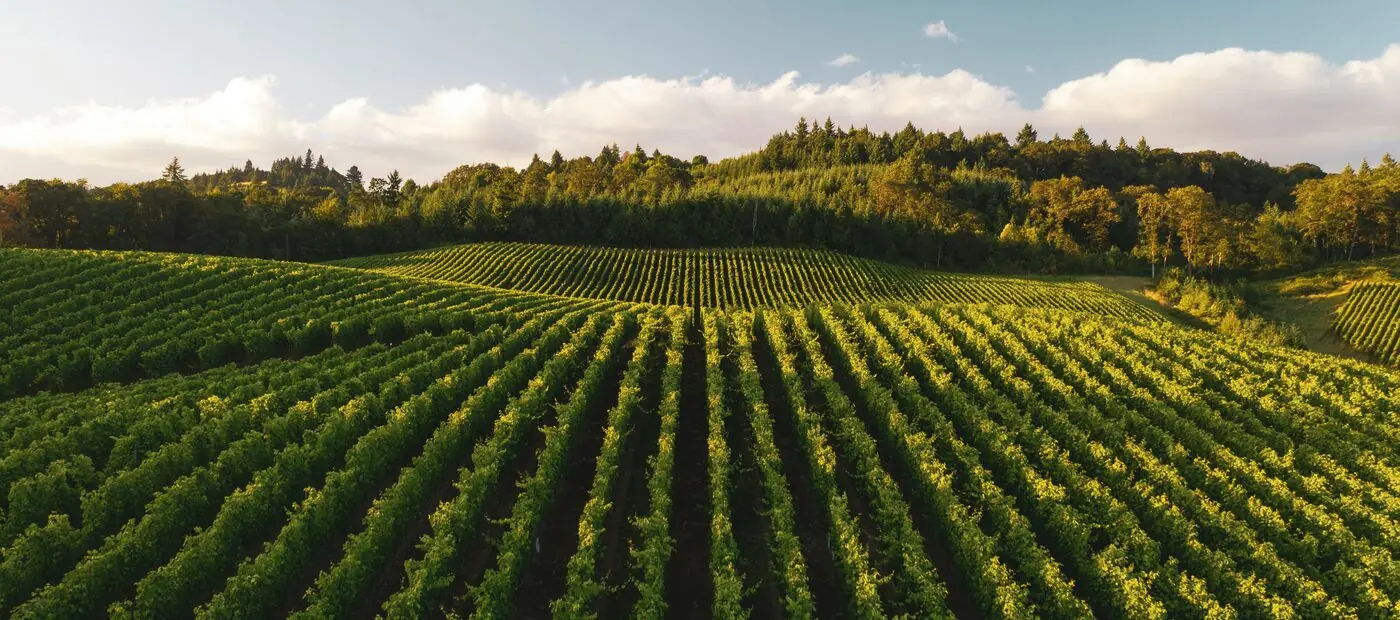
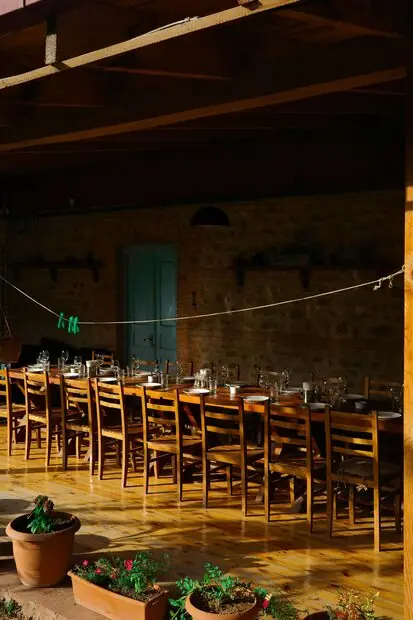
Photos: Dan Meyers, Tata Gorozia / Unsplash
Wine this far north used to be a joke with a punchline about rhubarb. It is not one any more. The vineyards below are working farms rather than châteaux, most of them planted within the last twenty years, and several now do the thing that makes a vineyard worth a detour in a motorhome: they will feed you, show you the cellar, and let you sleep outside.
This is a route we built on the map rather than a list we admired from a distance. Every stop is a place we hold a record for, with its own website, and everything stated below comes from the vineyards themselves. Where a claim is theirs rather than ours — an award, a superlative — it is written as theirs.
The route as it is planned on the map — A at Ästad in Halland, B at Vester Vedsted by the Wadden Sea, with the Kattegat crossing between Sjælland and Jutland. A is stop 1 and B is stop 9; the numbered pins match the list below. Overnight stops the planner adds are not shown.
Go in July or early August, or don't bother
This is the single most useful thing to know, and it is easy to miss when you plan a wine trip the way you would plan one in France. Nordic vineyards are small operations with short seasons. Several open for a handful of weeks and are shut the rest of the year.
| Vineyard | Season, as they state it |
|---|---|
| Flädie Mat & Vingård | 22 June – 14 August |
| Skepparps Vingård | 29 June – 29 August |
| Andersen Winery | Open daily July–August |
| Vester Vedsted Vingård | Guided tours Saturdays 10:00, July–September |
| Hällåkra Vingård | Summer season, until September |
| Arilds Vingård | Hotel from 3 April, glamping from late April |
| Kullabergs Vingård | Wine bar daily in summer; tours year-round |
| Dyrehøj Vingård | Tastings and experiences year-round |
The overlap is roughly the first week of July to mid-August. Outside it the route still works, but you will be looking at locked farm shops through a fence. Two stops — Kullabergs and Dyrehøj — carry the trip in the shoulder season if you want a shorter version in May or September.
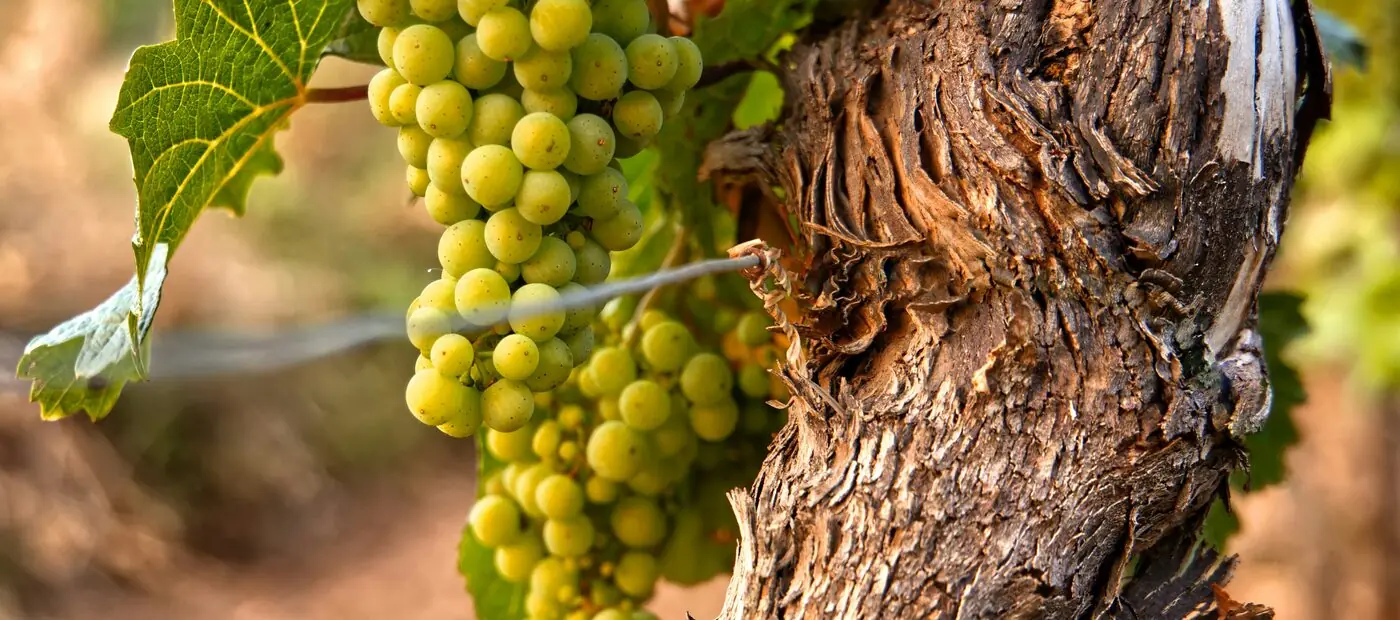
Photo: Moritz Knöringer / Unsplash
The stops
Photographs are each vineyard's own, from their websites — except Dyrehøj and Hällåkra, which are ours.

1. Ästad Vingård
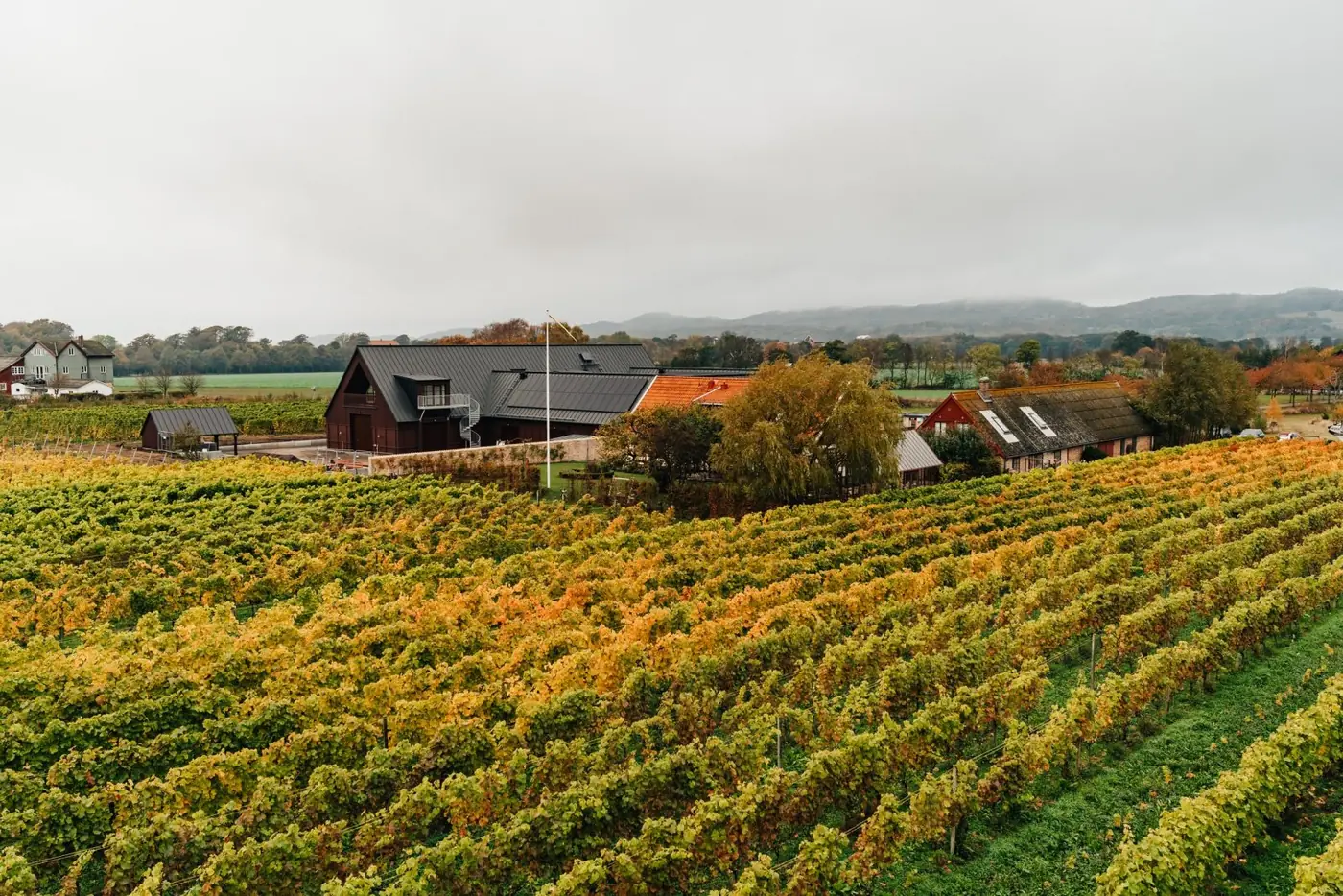
The most ambitious stop on the route and the obvious place to begin, set in a beech-forest nature reserve inland from Varberg. Alongside the vineyard there is a spa and a restaurant, ÄNG, which holds a Michelin star. They describe themselves as one of Sweden's largest wineries and farm organically. If you are going to spend money once on this trip, spend it here and stay put afterwards.
2. Kullabergs Vingård
Down on the Kulla peninsula, where the landscape stops being farmland and turns to cliffs. Guided tours and tastings run year-round, and the cellar-door wine bar, Skänken, is open daily through the summer. Their wines were served at the 2025 Nobel banquet — their claim, and a specific enough one to check. Along with Dyrehøj, this is the stop that still rewards you outside high season.
3. Arilds Vingård
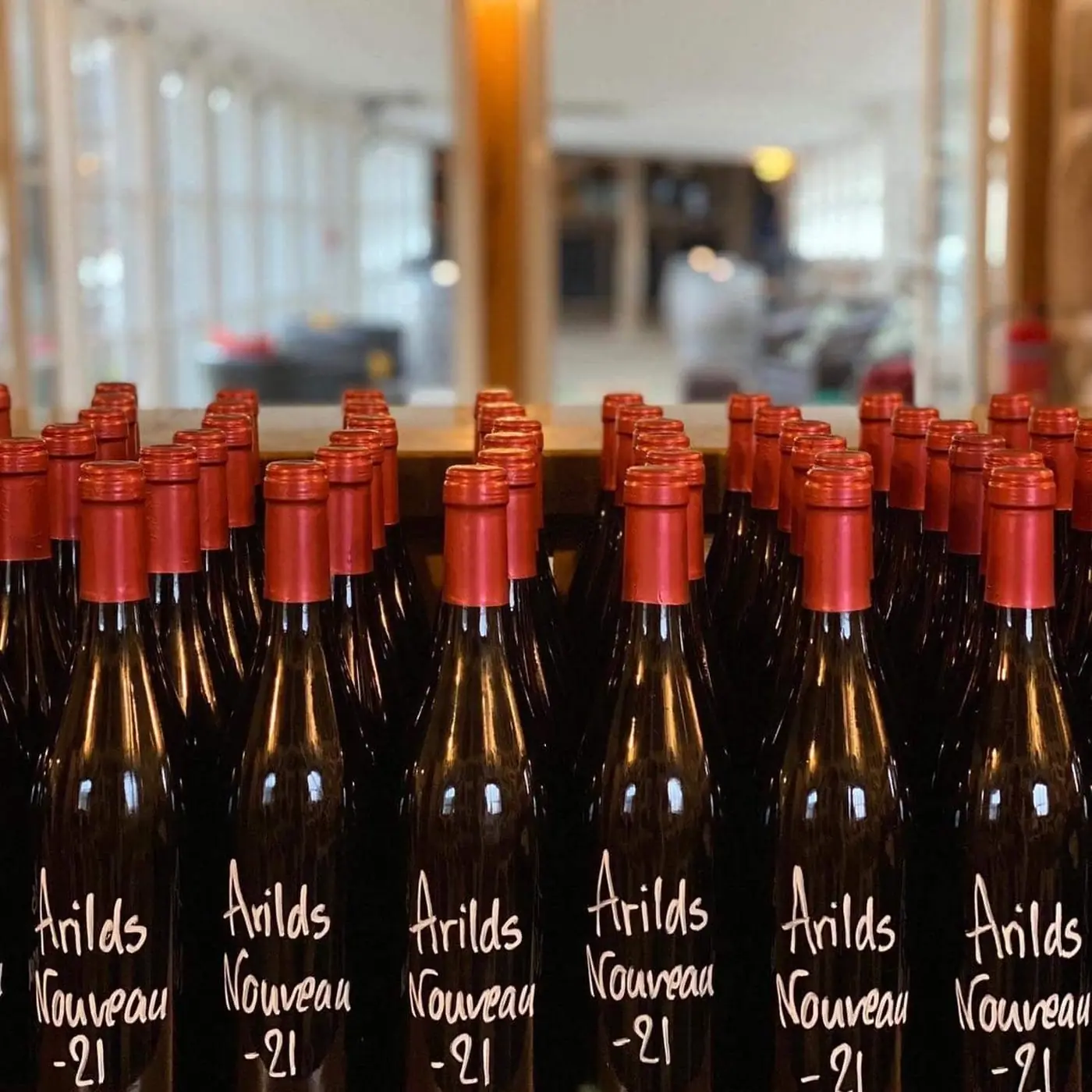
The one built for people arriving in a motorhome: they offer pitches for motorhomes as well as hotel rooms and glamping tents, which makes it the natural overnight anchor for the Swedish half of the route. Tastings, vineyard tours and three-course dinners with wine pairings, all with the vineyard in view. Being a short walk from Kullabergs, the two together make an easy, unhurried day.
4. Flädie Mat & Vingård
A restaurant and hotel with a vineyard attached, in the flat, rich farmland north of Lund — the part of Skåne that feels closest to Denmark before you have crossed anything. They lead with food and local produce as much as with wine, and dogs are welcome. Note the season: barely eight weeks, from 22 June to 14 August.
5. Skepparps Vingård
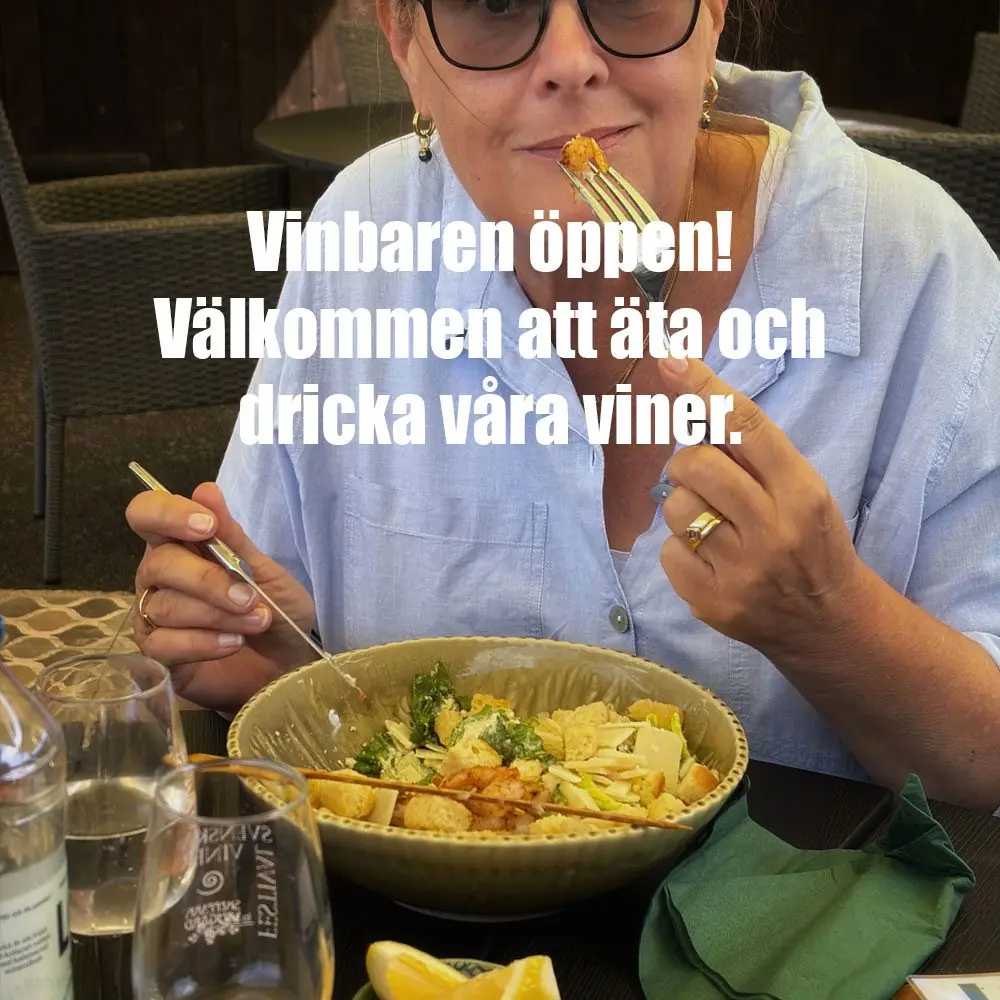
Österlen is the part of Skåne people drive to for its own sake — apple orchards, low light, small roads — and Skepparps sits in the middle of it, making wine and craft cider. One quirk worth knowing before you arrive: Swedish alcohol rules mean you must take a paid guided activity, about 30 minutes, before you can buy anything in the farm shop. A tour is 200 kr and a tasting 450 kr, so build in the time rather than turning up expecting to browse.

6. Hällåkra Vingård
The last Swedish stop before the coast, and the most experimental of them: natural wines in red, white and orange, theme nights through the summer, and a course that lets you be winemaker for a day. A good final Swedish evening if you have timed the crossing for the following morning.

7. Dyrehøj Vingård
Denmark's largest vineyard, on a narrow finger of land between Kalundborg Fjord and Sejerø Bay — one of the sunniest, driest corners of the country, which is not a coincidence. Tastings and experiences run year-round, and there is a wine bar and shop on site. It sits conveniently close to Sjællands Odde, so it pairs naturally with the ferry.

8. Andersen Winery
Sparkling wine made by the traditional method, and the most generous welcome on the route: tours and tastings are free, you can drop in without booking, and you can watch disgorgement and dosage — the part of sparkling winemaking nobody usually sees. Open daily in July and August; groups of ten or more should call ahead.
9. Vester Vedsted Vingård & Café
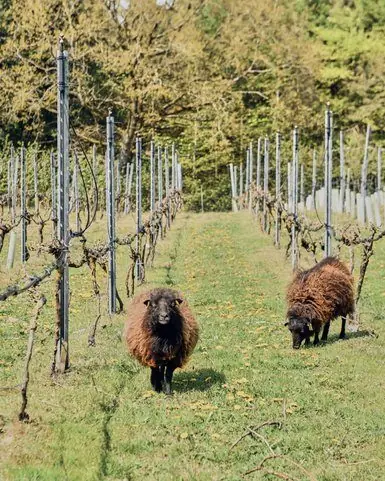
The end of the line, and a fitting one: a winery, distillery and brewery on one farm, with a café doing lunch and gourmet dinners and a shop selling wine and soap. It is a few kilometres from the Wadden Sea — a UNESCO World Heritage site and, in autumn, the stage for the starling murmurations the Danes call sort sol, black sun. Guided tours run every Saturday at 10:00 from July to September.
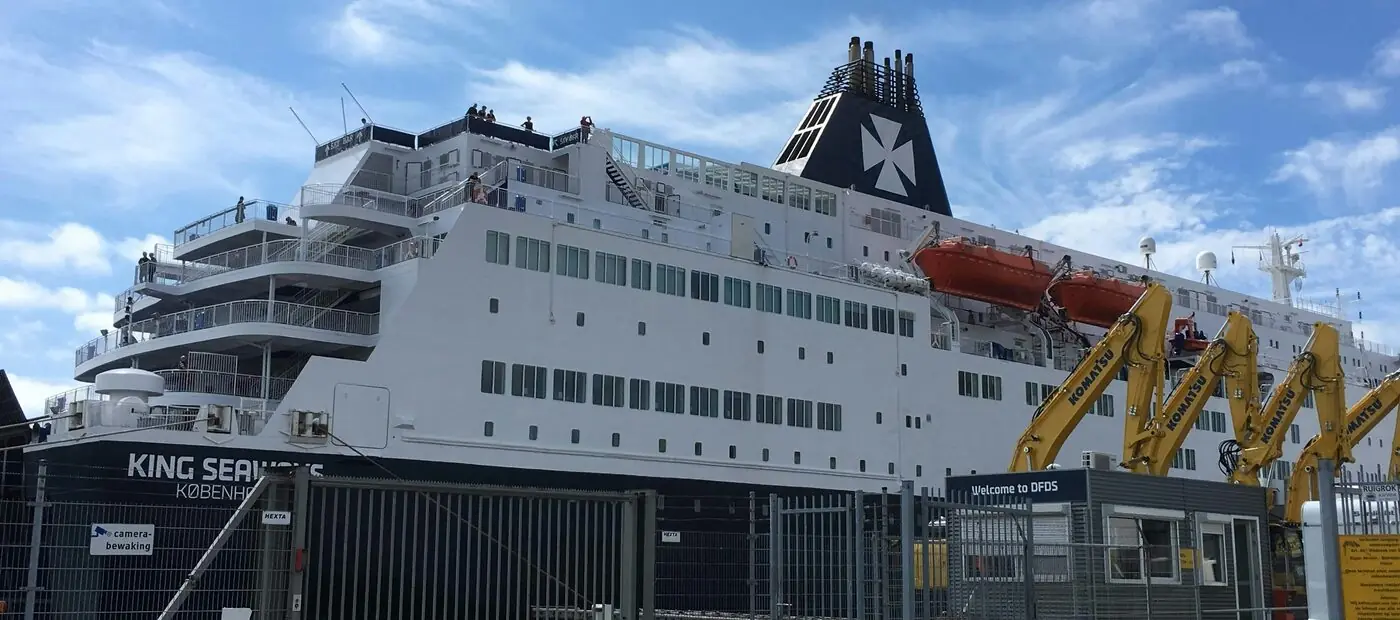
Photo: Olaf Janssen / Unsplash
The crossings
Two bodies of water sit between the Swedish stops and the Danish ones, and each gives you a choice between a bridge and a boat.
Öresund — Sweden to Sjælland
The strait between Skåne and Denmark, and the narrowest gap in the whole trip. The ferry runs Helsingborg – Helsingør, a crossing of only about five kilometres, from a terminal in the middle of Helsingborg to one that lands you directly beneath Kronborg, the castle Shakespeare used as Elsinore in Hamlet. It is the shortest international ferry either country runs and it goes very frequently; you queue rather than book.
The alternative is the Öresund Bridge from Malmö to Copenhagen — faster if you are already south, tolled, and a genuinely strange piece of engineering, since it becomes a tunnel halfway across at the artificial island of Peberholm. Coming from Hällåkra, the bridge is the natural choice; coming down the west coast from Kullaberg, the ferry is.
Kattegat — Sjælland to Jutland
The bigger crossing, and the one the planner picks for this route. The Kattegat is the sea between Denmark and Sweden that opens north into the Skagerrak and the North Sea. Molslinjen sails from Sjællands Odde — the long spit at the north-west tip of Sjælland, about 75 km of open water from Jutland — to both Aarhus and Ebeltoft, with up to 24 departures a day across their routes. These are fast catamarans rather than the slow overnight boats people imagine when they hear "Kattegat".
Odden Havn has an autocamperplads right by the terminal, which is why the route puts a night there: you arrive after Dyrehøj, sleep by the harbour, and take a morning boat. Landing at Ebeltoft puts you on Mols among rolling hills and beaches; landing at Aarhus puts you in Denmark's second city.
The bridge alternative here is the Great Belt — Storebælt — crossing to Fyn and on to Jutland by road. It is tolled and adds distance from Odden, but runs around the clock in any weather.
Drive it
The whole thing is on the map as a trip you can open, reorder, or strip back to the three or four stops you actually want. Add campsites where you need them, drag the route, and it will re-plan around your driving hours.